
I am so excited! I have been nominated for my first blogging award – twice. Thank you to Because I Can and Abysmal Heights for the honor, and for the chance to participate in this fun opportunity to find and share other worth-discovering blogs.
What is Liebster Award?
The Liebster Award is an award for relatively obscure bloggers (under 200 followers) to get them more exposure and form new connections in the blogging community. The rules of the competition are as follows:
- The nominated user must provide a link back to the person who nominated them.
- Provide 11 facts about yourself.
- Answer 11 questions set by the person who nominated you.
- Choose 11 more people and ask them 11 questions.
I love the idea, and the following content is my best attempt to comply with the rules in a way that will be consistent with my blog’s tri-part “focus” of faith, family, and focaccia (otherwise known as “cultural observations”). First, however, I have a confession and a random observation.
Confession: I actually have no idea how to find out how many followers another blogger has, so I am making my best guess. I ruled out blogs that get tons of comments (100+), since that probably means they have a lot of followers. If any of the folks I linked below have more than 200 followers, my apologies for underplaying your following and let me say – you deserve the numbers you have!
Random Observation: While I have been formulating my responses to these questions I happened to listen to a RadioLab podcast about numbers. “Eleven” was a somewhat featured number because, apparently, it represents the infinite (under the theory that ten represents wholeness or completion, and therefore eleven goes beyond completion). I just found that symbolism interesting considering the numeric pattern in this project. Eleven cheers for the infinite potential of the blogging community!
OK – now for my facts, answers, and questions:
Eleven Facts about myself.
(Faith)
-
My first distinct “faith” memory is of listening to a radio evangelist in the car with my Dad just before Christmas in 1980; I was not quite 4 years old. The preacher was laying out the classic “plan of salvation” and I was absolutely convinced. Dad talked it over with me when we got home and he led me through a prayer that night to begin my Christian walk. While I now find that brand of evangelism generally distasteful and my theology has transformed dramatically since the very simplistic roots of that childhood prayer, this memory helps me remember that God works in many different ways. Just because a given theology seems manipulative from my current perspective does not mean it is impossible for God to start something truly amazing and transformative in that context.
- I was baptized at the age of 8 and it is a beautiful memory for me. At that age I was almost painfully shy, and saying anything at all in front of all the members of my church community was terrifying, much less having to say in my own words what Jesus meant to me. All the same, I did it. Maybe that was the beginning of learning that saying something important, something that really matters to me, makes it so much easier to find my voice.
- I earned my Master of Divinity degree from Princeton Theological Seminary. I went into the program knowing that I didn’t intend to go into pastoral work, but also that theological training would be essential to any work I did for the rest of my life. Just because I don’t have a pulpit doesn’t mean my work is any less ministry that my classmates’.
- The very best thing for me about being in New Jersey (other than my nuclear family who would be with me somewhere else as well) is my church. If any of you are local and are looking for a community that will act out the love of Christ in all the messiness of real life, come check out Living Waters Lutheran Church!.
(Family)
- I am the middle of three daughters (the same as my Mom). Whenever I am tempted to assume that the differences between my son and daughter are the result of gender difference, I just think about me and my sisters. My sisters are massively different from each other and from me. I love them both very, very much.
- I am an ACOD (adult child of divorce). Dad left when I was 12 – a lifetime ago, and I sometimes forget that the experience shaped the person I have become. It is not something I still grieve about and I even think that it was probably the best solution to a really bad marriage. Also, I need to always be aware of the ways that the experience shaped my way of interacting with the world, so that it can make me both stronger and more empathetic, rather than more detached.
- My in-laws were thrilled when Tyler and I started dating, but when we decided to get married at the young age of 23, they were scared that we were too young. Looking back, I can totally understand where they were coming from. We were still kids, and figuring out how to be married at the same time that we were figuring out how to be adults was really difficult. I also think we were right. I would not want to lose a single one of those tough years and I would not have wanted to grow up with anyone else by my side.
- The first thing I ever wanted to “be when I grow up” was a mother. I am beyond grateful that I have the chance to be just that to two wonderful, healthy, happy children. Princess Imagination and the Gigglemonster have changed my whole world in such wonderful ways. They have also helped me realize that in order to be a really great mom I need to be more than “just a mom.” I am most present and responsive and excited about parenting them when I am being nourished by the other things that stimulate my soul: prayer, social action, writing, my marriage, and friendship.
(Culture)
- I am really uncomfortable with patriotism. I went through a phase where I got really squirmy about anything blatantly patriotic (I once forbade my father-in-law from planting red, white, and blue flowers in my garden) because I associated it with Us versus Them nationalism that bothers me on a moral and interpersonal level. My experience as an expatriate in Italy for three years gave me a new view on my own culture, and in some ways reinforced my belief that America sometimes gets things very wrong. At the same time, that time away helped me realize that I love my country. It is mine. It is the context that introduced me to life and even when I see its faults, I still would not want to live anywhere else for more than a few years.
- I want to love other cultures (national, racial, political, religious, etc.) more than I actually do. I am in love with the idea of diversity and I firmly believe that exposure to really different ways of interpreting reality is vital to personal growth. I make an effort to interact with these other perspectives. When life gets real, however, I don’t want to listen anymore. I want to be comfortable in my own assurance that I am right. sigh – not nearly as mature as I like to pretend.
- Focaccia is seriously the most amazing culinary creation in the history of the world. It is even better than chocolate. I can’t think about the fact that I may never again taste the salty, puffy, dripping goodness that is the pinnacle of taste produced at Forno Ambrosiano, the bakery that was just down the road from our Milan apartment. If I think about it, I might just start crying.
Questions from Abysmal Heights
1. How old are you?
I am 37. I think it is a pretty good age. I am young enough that I can still do most physical thinks without my body breaking down and I am old enough that I no longer think I know everything (and that fact no longer bothers me). The only bad part of this age is that, being born in 1977 places me between generations – I was just too young to be Gen X (a cut-off that I remember feeling excluded by in high school), but I am not a millennial either (being born well before the internet). This birth year has always left me feeling a bit generation-less. I have loneliness issues as it is, so that’s a bit tough.
2. What is your favorite song?
“You are my sunshine.” The song has always has made me smile. The fact that my son has been singing it to me for the past week and a half in preparation for the mother’s day concert as his pre-school might have something to do with it too. That, and that fact that since my kids are singing “you are my sunshine” they are not singing (and I only use that term for lack of a better one) the frozen soundtrack…
3. Who is your inspiration?
From a distance – Mother Theresa. I am overcome by the fact that she helped so many people with no interest in what it brought her; that she identified a whole new kind of vocation that was desperately needed but no one had had the courage to do before; that she never lost her focus. I spent a semester studying her in college and was both humbled and inspired by the exposure.
From up-close – my sisters. Both of my sisters have battled some intense challenges over the course of their lives and rather than just surviving them they have grown through them into amazingly strong women.
For both perspectives – Jesus. Jesus is both a transcendent figure that I can only gaze at with awe, and also the most constant and faithful companion of my life. I fail every day to follow his way, but I do believe it is the perfect way.
4. What does your blog mean to you?
This blog is my public journal. It is a journal in that is it my place to process my life experiences and to try to figure out how to grow through them. While it is sometimes hard for me to be vulnerable and honest in face-to-face conversations, the medium of the written word somehow frees me to think through my life in a way that isn’t constantly second-guessing how my conversation partner might react. I can’t really explain how I am able to do this in a public way, except that I feel called to share my writing. I have discovered that my own processing can sometimes speak to others, and that gives it another layer of meaning for me.
5. What is the one thing you want to do before you die?
There are a few ways to answer this question. If I look just at the word “do” then I have to think about the actual doing of the thing, rather than the result. Seen that way, I want to be there for my family. That activity is the most important “thing” I “do” in any given day. If, however, I consider what I want to “have done” before I die, I suppose the answer is to publish a book…or actually three…at least. I have these three stories that have been swimming around in the craziness of my very busy life for several years now and they are just refusing to drown. I take that as a sign that they really want a life on the page and even (dare I hope) in others people’s minds. One at least is very near completion in the manuscript form, so I am hopeful…
6. What is your favorite book?
Gaudy Night by Dorothy Sayers. Sayers is by far my favorite author, especially her detective fiction. She is a master of writing a compelling story in the “who dunnit” genre that could stand as masterful fiction even without the mystery component. Her characters not only make me really care about them, but they make me think about my own way of being in the world and want to do a better job of it. Since Lord Peter Whimsey was also my first (and most powerful) literary crush, it’s only natural that the book where he finally gets the girl is my all time favorite story.
7. What is, according to you, your best post?
The one that still stands out in my mind, even after the sixty or so I have written since, is The Wind on the Water. It came from a spontaneous sense of connection to both my daughter and the heart of God. I get shivers remembering.
8. What is your idea of a perfect life?
I think the circumstances could be almost infinite. The crucial component to a “perfect” life is the liver’s approach to it. And I think the perfect approach would be one defined by what Jesus defined as the first and second commandments: To love the Lord your God with all your heart, soul, mind, and strength. And love your neighbor as yourself. I fail every day, but that is my goal.
9. If you could choose between money and esteem, which would you choose?
My answer depends on the details. If choosing one means deprivation of the other, then I would choose money. I study poverty and I know just how destructive it is. I would rather live without the esteem of others than try to survive in a condition of abject economic deprivation. On the other hand, if the choice is about which I would like more of (assuming an adequate share of the non-chosen item), then I would choose an abundance of esteem. It would be hard to continue to earn it, but I know myself and I know that recognition and esteem are what I crave more than monetary wealth, so I have to be honest about that. All that said, I know that excess of either money or esteem is morally dangerous, so my life would probably be best with just a reasonable share of both and excess of neither.
10. What do you do when you are sad?
My reaction to sadness varies a lot. When I am in a healthy place I pray and I talk to those I love the best (my husband, sister, closest friends). I also hug my kids a lot. There is nothing as healing as their warm, snuggling affection. When I am in an unhealthy place I eat lots of chocolate, sleep too much, and lose myself in books or TV shows that distract me from my pain. I have a lot of experience with the wrong method (4 bouts of depression), but thankfully that hasn’t been a recent part of my life.
11. Describe yourself in one word.
Loved.
Questions from Because I Can
1. If you could go into the past or future which would you choose, why?
Honestly, I am not particularly interested with going to either. I am repelled by the treatment of women and the lack of indoor plumbing in the vast majority of the past, and with the way we are treating the planet and each other I am not particularly sanguine about the future. That being said, there is one moment I would desperately like to experience. See my next answer.
2. If you could go back into the past or the future when would you go, why?
I get shivers at the thought of going back to the moment where Mary (sister of Martha and Lazarus) sat at the feet of Jesus to learn, and was emphatically and definitely praised for this choice. To be able to sit and learn from Jesus side-by-side with Mary would, I believe, change me in ways that nothing else could.
3. What is your favorite piece of clothing and why?
My wedding dress. I have never felt more beautiful than I felt on the day I was married. It was a dress that represented all the hope and joy of the commitment I made that day and those memories are golden and shining. Even running my fingers lightly along the beading, or watching the soft chiffon float back into place when I move the dress makes me smile.
4. What is your favorite book, and why?
(See my answer to question 6 from Abysmal Heights).
5. What is your favorite movie, and why?
I don’t really have one at the moment, but the first “favorite movie” I ever had was Dead Poet’s Society. Part of that was almost certainly Ethan Hawk at his awkward, dreamy best. The more important part, however, was the inspiration to think and dream and engage the world, whether or not the way you are called to dream fits into the rules. “Oh Captain, My Captain!”
6. What is your least favorite household chore?
I really, sincerely detest cleaning the bathroom. I shudder to think of the germs that are in there (and how they would be multiplying if my husband were not really great about doing this chore).
7. If you could change jobs what job would you want instead?
I love my job (I work for a non-profit that promotes policies and programs to fight poverty). The one thing it is not, however, is explicitly faith-based. I am most certainly and explicitly faith-based. So, my other dream job would be a regular contributing writer to Sojourners Magazine. This magazine was the first publication that introduced me to the wider world of liberal evangelicals whose faith calls them to pursue social justice. That orientation and the chance to actually get paid for my writing would be just amazing to be part of!
8. What would be your dream car?
First off, I am not a car person. To me, a car is a tool and nothing more – a way to transport myself, my people, and my stuff from one place to another. That being said it is all about practicality for me. My dream car would be the (nonexistent) vehicle that runs on solar power, has no distance limitation, has plenty of space for at least 8 people, is easy to get little kids in and out of, easy to clean, and is easy to park. Get working on that, would you Detroit?
9. What is the one charity you would give all of your money to?
There are so many great charities out there that do amazing, important, necessary work. There are also a lot of wonderful people who give to charities (although there is always greater need). If I am asked to pick just one, I guess I would choose one that isn’t that well-known and where “all my money” (modest as that might be) could make a huge difference. So, I would choose my church, Living Waters Lutheran in Flemington, New Jersey. It is a community that makes me feel like New Jersey is actually my home. It is also a community that is always looking for ways to help people (in our congregation and in the broader community). Thus, I know the money would be used to do really good things. It is also a young church without a lot of financial resources, so a little money could do a lot to give it more security.
10. What is the one thing that you want to do with your life.
In one sentence: I want to love well. What that means to me is probably best described in my answer to #8 in the prior set of questions from Abysmal Heights.
11. What makes you happy?
What makes me happy is seeing love lived out on every level – in my own relationships, in lives around me, in society, wherever. Not to be too cheesy, but I think the Beatles were on to something. All You Need Is Love.
Now For My Nominations
(As I said above, I don’t know for sure about the 200-follower limit. But whether or not these are “good” nominations by the rules, they are unequivocally good blogs. Check them out!)
A Happy Stitch
Rascals Among Royalty
A Touch of Cinnamon
Like Birds on Trees
Flourishing Tree
Purple Perceptions
Peace Love and Patchouli
The Discerning Christian
FosterCare Q & A
SMHallisey
I Miss You When I Blink
Your Questions, Should You Choose To Accept Them
(Along with my “about me” facts, these questions are organized roughly around my three blogging foci – faith, family & “focaccia” (a.k.a. cultural experience))
- What does the word “faith” mean to you?
- Were you raised in a particular faith, and what meaning does that faith (or non-faith) upbringing have for you now?
- Assuming there is a God, would you want a personal encounter with God tomorrow, and what would you expect?
- What do you think is the best role that faith can play in interacting with culture?
- What does the word “family” mean to you?
- What is your first memory with your family?
- Growing up, did your most important influences come from inside or outside your immediate family?
- What role does “family” play in your life now, and why?
- What does the word “culture” mean to you?
- How do you feel about the culture you were raised in?
- If you had to live in another culture for the next three years, which culture would you choose and why?
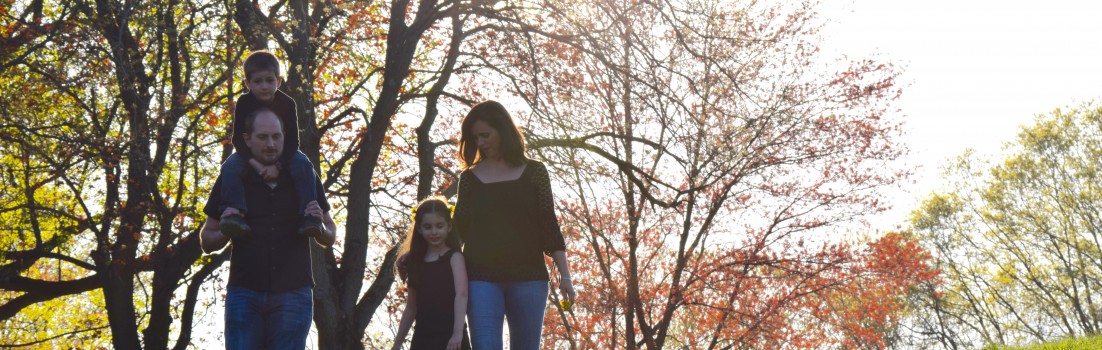

 Faith, Family, & Focaccia