Faith, Family, & Focaccia

A faith and culture Mommy blog, because real life gets all mixed together like that.


2 Comments

Hair and Vanity

Princess Imagination and I have an ongoing battle about her hair. I want it brushed regularly. She resists contact between her hair and any kind of brush or comb. I want it arranged in some way that looks relatively neat and keeps it from covering up half her face. She prefers it wild and free, which invariably means it is ends up in her mouth and eyes and makes it hard to see her pretty little face.

At the beginning of the week I thought I had finally landed on a solution: headbands. After refusing a ponytail, braids, or clips, Princess Imagination enthusiastically embraced my desperate proposal that she at least hold her hair off her face with a headband. She allowed me to settle it in place just behind her bangs, with the wispy curls she still has framing her face from her baby days securely tucked behind the band. Suddenly she looked neat and well-kept and her sweet little face was fully visible. Victory! We were both happy, and since she has a large selection of these hair-taming accessories, I had a lovely fantasy of future mornings unmarred by mother-daughter hair battles.

The fantasy lasted until I picked her up from school that afternoon. In the intervening hours her sparkly pink headband had somehow been transformed from a hair-taming implement into a co-conspirator in operation birds nest. Rather than neatly holding back her hair from its proper position atop her head, it had gone vertical and was smashing her bangs flat on her forehead while the escaped front locks were running free, with several section plastered across her cheeks as the result of time spent bathing in her mouth. Argh! What is wrong with my child?! She is a beautiful little girl, but no one can see that because she seems determined to turn her hair into a frizzy, knotted, veil!

With the distance of a few days I can recognize that my response to this very unusual styling was probably an over-reaction. I don’t think Princess Imagination is deliberately covering her face with her hair. She simply finds it uncomfortable to have her hair pulled back, and also finds it convenient to suck on her hair to satisfy her oral fixation (which is probably my fault for nursing her so long). The resulting follicle foibles do not worry her because she is just oblivious to what she looks like.

And there’s the source of discomfort in this little domestic squabble. The problem is that appearance is not a matter of oblivion for me. In contrast to my daughter’s indifference, I care a little too much about appearance – both hers and mine. This concern about how I and those associated with me look goes back a long way. I can vividly remember my own screaming temper tantrum at the age of 8 or 9 in reaction to a rather unusual wardrobe selection by my older sister. Granted, choosing to wear a wrap-around ballet skirt as a shawl was eccentric on the part of my sister, but my reaction was also a bit excessive. And the extremity of my reactions, from the mid-80s to now, makes it clear that the issue  is really with me, not with the creative accessorizers in my family. I just care too much about appearance.

Now, this is not to say that I am a fashion plate by any stretch of the imagination. I do not have dozens of handbags. I do not buy shoes to match specific outfits. I cannot justify spending three or four times as much for designer labels. And I do not spend an hour coiffing my hair every morning (or any time of day, ever). BUT… I have to admit, that there is a very dissatisfied little corner of my mind that turns an unattractive shade of green when it spies the glamourously styled moms doing drop-off at school. I am ashamed of it, but it is there. A part of me desperately wants to be the one who draws admiring, or even envious looks.

Of course, more than a year and a half of residence in one of the capitals of the fashion world has exacerbated this tendency. Two years ago I could not have even attempted to tell you what the fashion trends of the season were. I bought clothes that suited my style and figure and did not worry too much about what was trendy. Now, just taking my kids to school or walking past the shop windows in the neighborhood of my Italian class gives me an education in the current colors, cuts, and must-have accessories. This knowledge is anything but helpful. It focuses my awareness on all the things I don’t have and makes me self-conscious about the functional clothes and shoes dictated by my role as a stay-at-home mom. In more basic terms, it both increases the value I place on appearance, and amplifies my dissatisfaction with my own achievement relative to that standard.

Naturally, this evolution has not made for a happier me. However, I realized something as a result of my headband confrontation with Princess Imagination. My feelings of fashion-inadequacy are not really the matter of greatest importance. What matters is how much I have allowed my appearance, and my daughter’s, to impact my emotional state. I do not want to be that mother. I do not want to be that woman.

What I do want is to teach my daughter that what matters is the kind of person we are, not the way we look. What I do want is to teach her is to be concerned about what her behavior and her speech (rather than her clothes and her hair) tell other people about who she is. What I do want is to live the kind of life that teaches these lessons more effectively than my words ever could. These desires are not easy to achieve. It might actually be a more attainable ambition to be the fashion-plate mom that draws the envious gaze of others at school drop-off. But that achievement would not be worth the effort.

And so, I will continue to fight this life-long battle to stop caring so much about appearance. I will remind myself that the time I have while Princess Imagination and the Gigglemonster are in school is not best used for shopping. I will pull my hair-back into the ubiquitous pony-tail and use the time I saved to spend to prepare myself in pray a bit longer each morning. I will continue to wear my sweaters and boots from last winter (or five winters ago) and thank God that I have more than enough clothes to keep me warm as the temperature drops. And, when I brush my daughter’s wild hair out of her face so that I can look into her eyes, I will tell her that she is beautiful because of who she is, not how she wears her hair.

The headband-across-the-forehead has been a favorite look of Princess Imagination’s for years. Maybe she wants a crown?
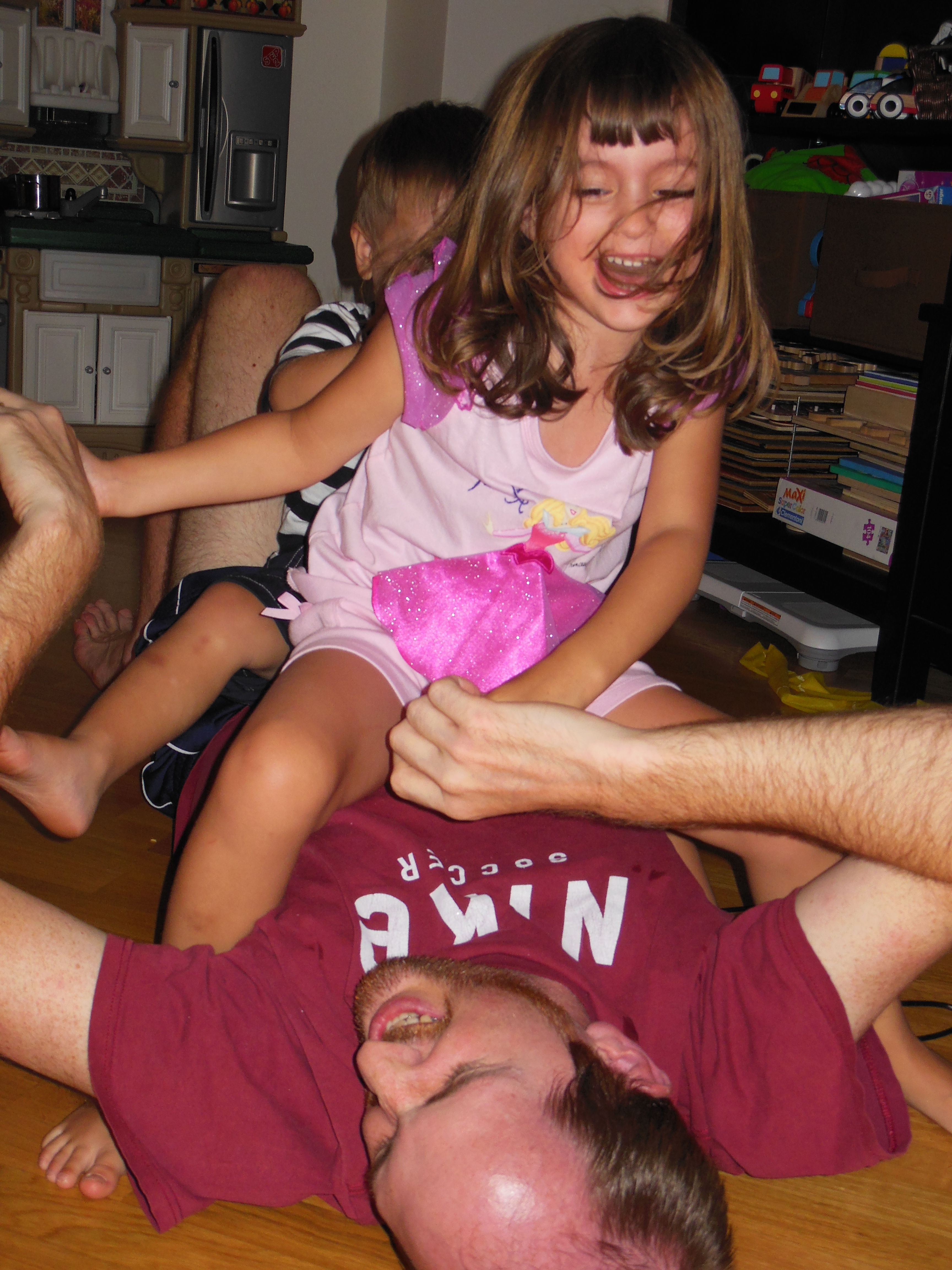
Her smile shines even through her hair.

1 Comment

Talking “the Talk”

I started this post two weeks ago, but could not finish it. It felt too unsettled and raw. I didn’t know how to conclude my observations honestly while still leaving the possibility to move forward in a positive direction. Well, I think I am starting to see that way, but I am leaving the beginning as I started it, because it is honest and hopefully witnesses to the important lesson I have learned. I hope the resulting narrative is coherent enough to make a good read…

Well, school has started. If I were to judge by Facebook posts from other stay-at-home moms, or advertising targeted at the same audience, I should be in a state of delirious bliss. For the first time, both of my babies donned school uniforms and backpacks and set of on the adventure of formal education. This leaves me with that previously elusive commodity; free time. Time to walk the city without a stroller or diaper bag; time to exercise; time to read non-picture books; time to engage in activities because I find them personally enriching (with no offense intended to the Itsy bitsy spider or Giro giro tondo).

While all of these things are a blessed luxury that I know I am incredibly privileged to have, I do not find myself luxuriating in the promised relaxation. Rather, I am feeling anxious. Anxious because of the one thing I am not free to do. I am not free to help my children deal with the stress that comes from being some of the few foreign children in an environment of Italian children; children who all share a common language and culture which creates unintended barriers to friendship.

Despite the fact that Princess Imagination has already spent nearly a year and a half attending their English-language school in Milan, the challenge for her of being a shy, American child has come home to me in a new way this year. Perhaps this is because I myself have begun to feel more comfortable here. I know the routines of the school schedule; I know the other parents in her class; I am even her class’s parent representative to the Parents Advisory Board, with some share of responsibility for welcoming new families. With this is mind, I sat my Princess down a few days before the start of school to have “the talk.” I was inspired by a wonderful entry on the momastery blog (see: http://momastery.com/blog/2012/08/23/the-talk/), although I simplified it down to be appropriate for a newly five-year-old. In essence, “the talk” is the exhortation to one’s children to be aware of other children in the class that are excluded, and to be intentional about including them. It is a wonderful lesson to teach children from a young age, and I am very committed to teaching it to our children. I also know that it may be a challenging lesson for Princess Imagination, given her shyness. Nevertheless, I talked about this responsibility to Princess Imagination. I reminded her how it felt to be the new kid in her class when we first arrived in Milan it February 2011. We talked about her first friend here (a sweet, Milan-born, British girl who has since moved to Australia), and what a difference this friend’s welcoming smile made in her first months at school. I encouraged her to be actively looking for any children in her class who were having a hard time fitting in, and to make a point of being a friend to them. We talked about all these things, she agreed, and I felt very good about my parenting.

Then I picked her up from school the first day. When I entered the classroom the children were busy talking and playing together. Or I should say, almost all of them were. My sweet Princess was sitting alone on the little reading couch looking around at all the other children with a sad little look on her face.  When she saw me she ran up for a big hug and was suddenly all smiles, but that look of loneliness had struck at my heart.

On the walk home we talked about her day. She liked her teacher. She liked being back at school where she could engage in focused learning activities. She liked the praise she received from her teachers for her good behavior and academic work. They had a music lesson that she really enjoyed. Then I asked about garden time (“recess” for my American readers).

Me: “How was garden time?”

P.I.: “Ummm, OK.”

Me: “Who did you play with?”

P.I.: “No one.”

Me: “Why not?”

P.I: “They were all playing with their friends from last year.”

Me: “But you have friends from last year.”

P.I.: “Um, not really.”

Just 16 words, but they hit me like a wrecking ball impacting somewhere in the region of my solar plexus. Emotions went spinning off from the point of impact in a variety of directions. I was devastated at the thought of my sweet little girl wandering around that play yard looking for a friend and not finding one – for an hour! I was overcome with the awareness of just how much I loved her and longed for her happiness. I could sense my mother bear instincts let out an internal roar, and I felt an instinctual impulse to protect her from anyone and everyone who hurt her with this rejection. I wanted to cry, and hug her, and tell her that she was the most amazing, kind, fun, lovable girl in the world and that anyone who did not recognize what a privilege it was to know her was blind.

Then another thought supplanted all of these emotions with a new fear: that I had made this experience worse before it even happened. Suddenly “the talk” we had a few days earlier sounded much different when I considered how it may have sounded to her little ears. I had initiated “the talk” based on the blithe assumption that my daughter would be in a position to offer inclusion to any excluded child. But how would my encouragement to include others sounds to a little girl who felt excluded? Would it sound like an irrelevant instruction that was outside her control? Would it sound like a judgment of the other children, with whom she nevertheless wanted to be friends? Would it sound like a declaration of her failure to be included?

I had to do something, both to help her overcome this difficult experience and to manage my own swirling emotions. So I started to game plan with her. I identified children she should approach at playtime (based on friendships from last year and facility with English). I coached her on strategies to coax others to include her. I reassured her that the first few weeks of school it was hard for the Italian children to get back into the habit of speaking English. And I, perhaps belatedly, reminded her that she was a wonderful friend and that she did in fact have friends from last year who knew this.

My sweet, patient, little Princess accepted all of this well-intentioned Mommy interference with more grace than it deserved, and faithfully implemented most of my advise in the coming days. Each day after school I would ask about her day, and (I blush to admit), would quiz her about her social interactions when the information was not forthcoming. Some days the reports were good: she had played with a friend, she was getting to know the new girl in class, she wanted me to invite this or that friend over for a play date. Other days, she reported solitary garden time “just walking around”, or replayed an interaction where she sought inclusion and was rebuffed.

As we engaged in this daily report three things slowly began to dawn on me that have both humbled me and made me incredibly proud. First, I began to realize the intensity of my own reactions to her reports. When she talked about time spent with a friend I was elated. When she reported difficulties I was crushed. All mothers, of course, are invested in their children’s well-being and want them to experience acceptance and friendship, but I started to feel that perhaps I was taking this too far. Perhaps I wasn’t entirely reacting to Princess Imagination’s feelings of happiness or loneliness, but was rather projecting my own past experiences onto hers. As a shy child myself, who often felt excluded and longed for inclusion and friendship, perhaps I was responding more to my own unresolved insecurities than to her current feelings. As I confronted this possibility I made my second discovery: that Princess Imagination’s reports did, in fact, lack the emotional intensity of my responses. There were shades of sadness in descriptions of “not being able to find a friend to play with,” but no desperate loneliness or self-loathing. There was some happiness in reports that she had played with a given friend, or been included in another group, but not elation. In fact, Princess Imagination was generally taking whatever came as it came, and not making a big deal out of it. And this led to my third, most humbling realization: my own anxiety was creating a much bigger crisis for my daughter than would have otherwise existed. She was now required to report each day on her success or failure in a task that she found challenging. She had to process my emotions and insecurities as well as her own, and mine were substantially more volatile. She had to implement my strategies and solutions to improve her social standing, because if she did not she would certainly face questions about this failure. I had turned the understandable social awkwardness of an introverted American 5-year old in a class comprised almost entirely of Italian children into a problem that had to be solved.

I have recently been reading Dorothy Sayers’s amazing book The Mind of the Maker in the later pages of which she lays out a very detailed and cogent argument for why the habit of approaching life as a series of “problems” to be “solved” is both irrational and dangerous. I can now add my response to Princess Imaginations lonely garden time as another illustration of her point. When I approached it as a problem, with whose solution I was obsessed, I lost sight of the life that was experiencing this challenge and I forgot the truth that each day of her life is a part of her story that is building her character and providing her with the opportunity to grow into a strong and creative young woman who can cope when life is imperfect. A young woman who can even cope, with amazing tolerance and love, with an interfering, anxiety-ridden mother trying to re-write her own past through my daughter’s present.

As I said, this past few weeks has been very humbling. But it has also been a blessing. I am blessed to have a new vision of my daughter’s strength and wisdom as she takes a challenging experience she never asked for and makes the most of it. I am blessed with the knowledge that my mistakes are not irrevocable because she can forbear them and find some nuggets of helpful advice mixed with the garbage. And I am blessed with another reminder of just why I am not relying on my own goodness to perfect my soul, but instead resting in the grace of my Savior.

I have heard it said that parenting is the hardest job you will ever love. I would add that it is also among the most humbling experiences that will ever make your spirit soar.

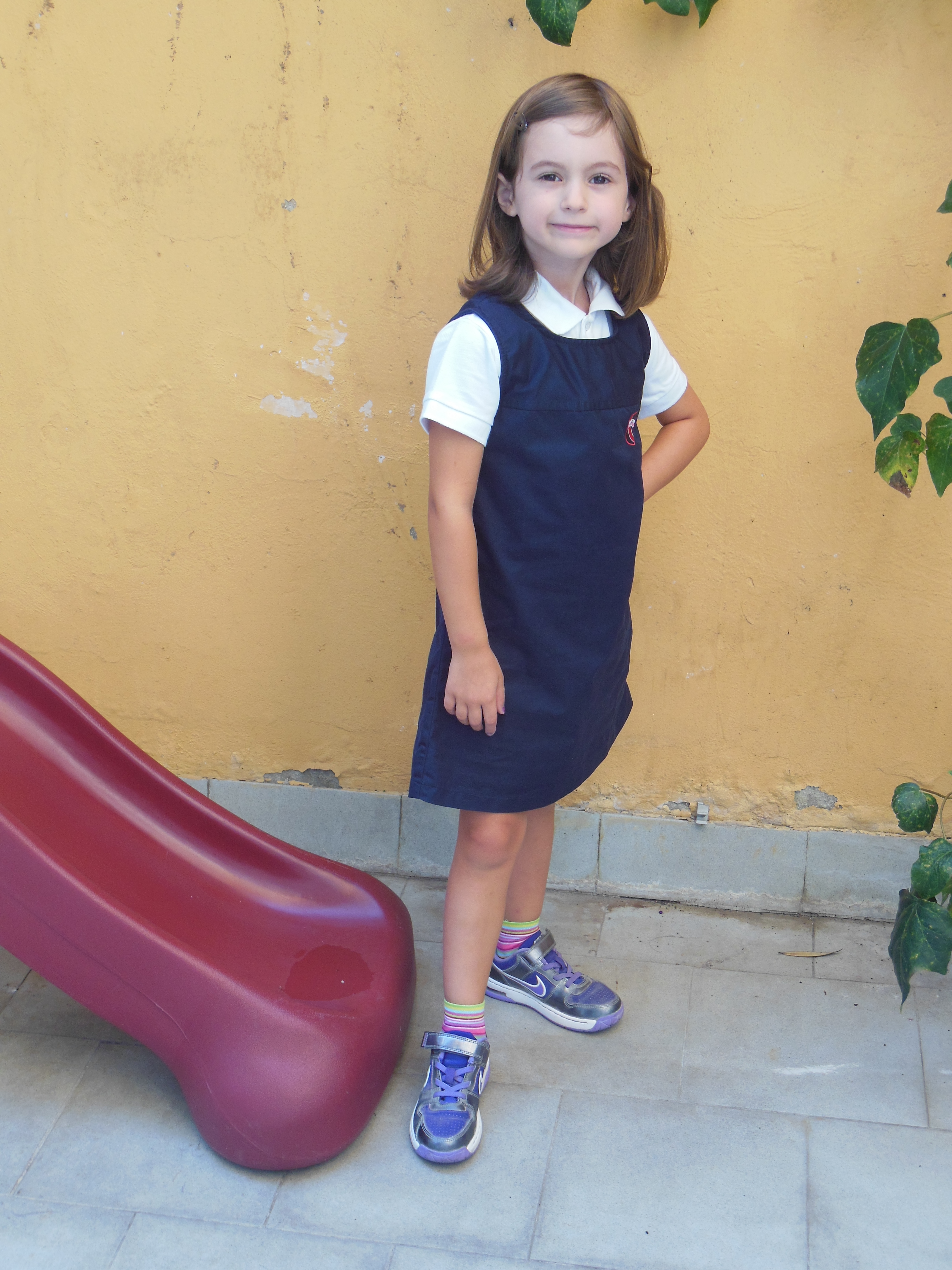
Although I sometimes fail to recognize it, my Princess has her own kind of confidence

They always have each other.